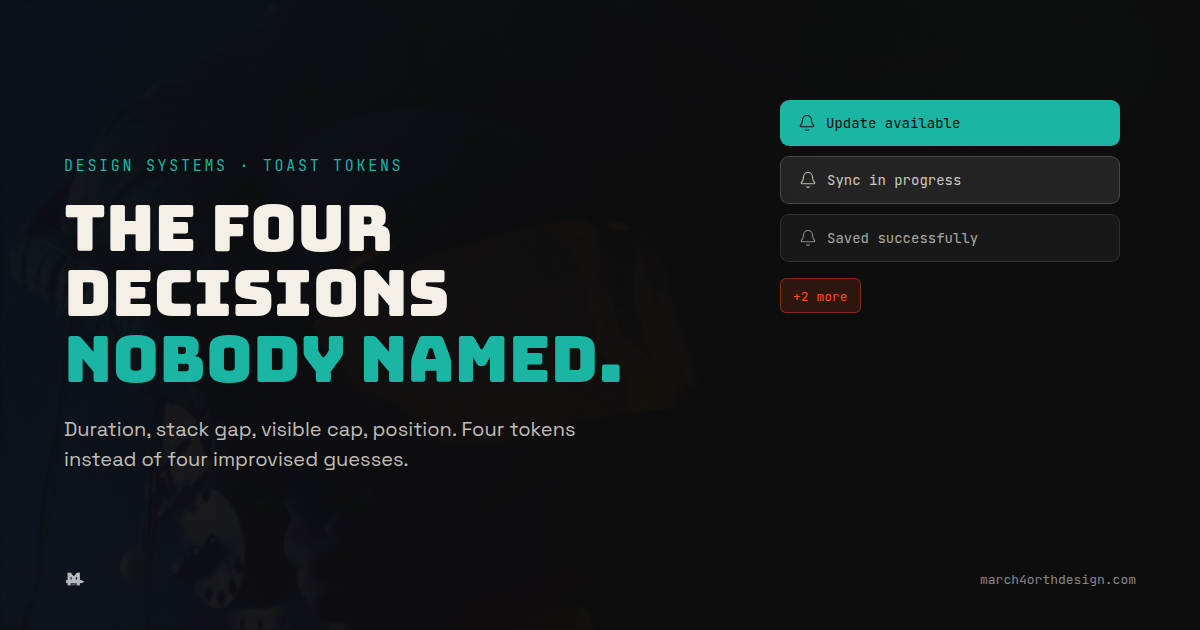

Every toast on your site already has a duration, a stack gap, a visible cap, and a position, whether anyone decided them on purpose or not.
Toast components tend to arrive late in a design system, usually bolted on by whichever engineer needed one first. One component fades out after two seconds. Another needs an explicit dismiss because a network request is still in flight. A third stacks directly under the last one with no gap, and a fourth stacks with twenty pixels of air because a different developer eyeballed the spacing. None of this is a bug in any single component. It is the absence of a decision that was supposed to be made once, at the system level, instead of once per component.

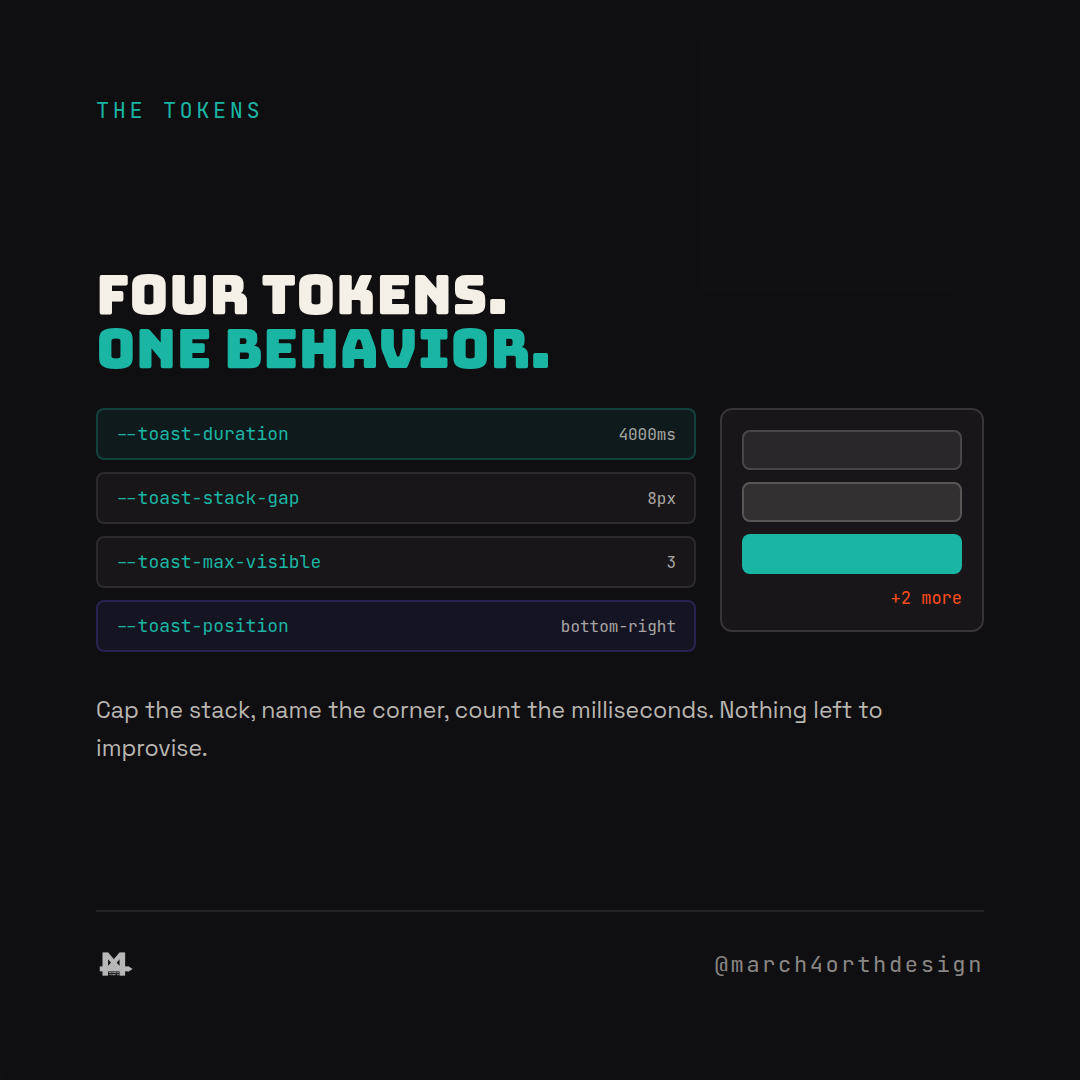
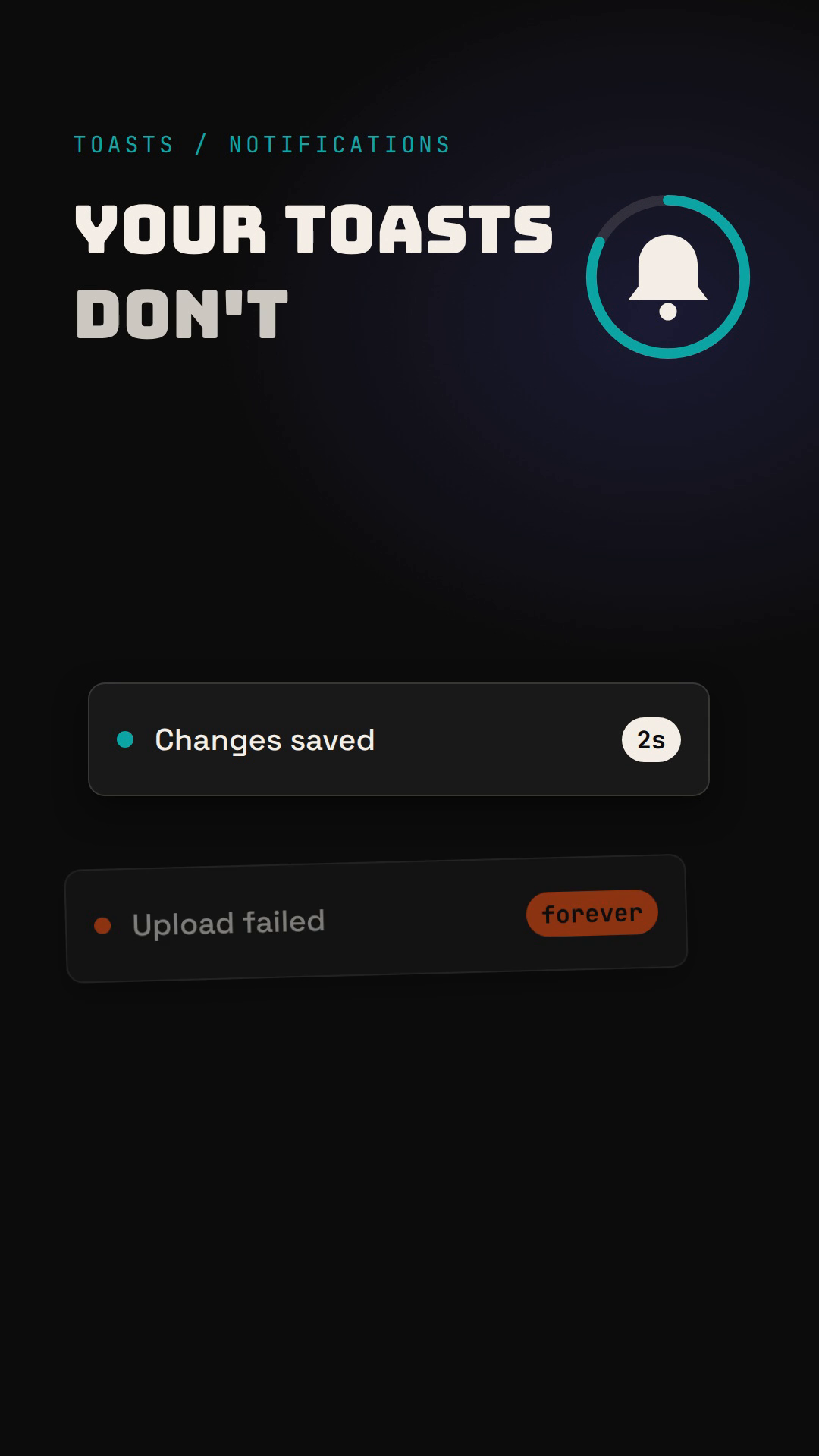
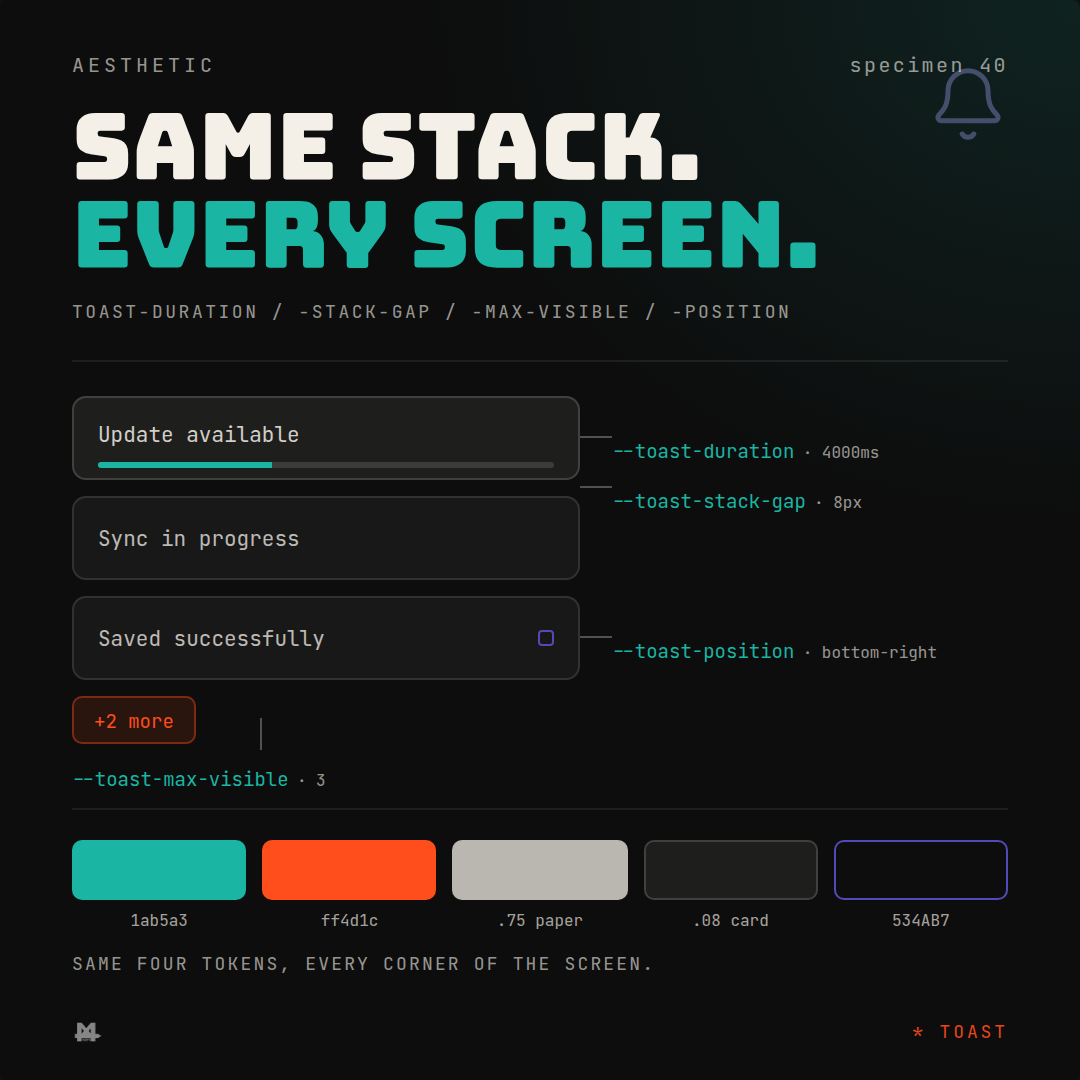
Four custom properties name the decision instead of leaving it to whoever ships next. `--toast-duration` is the one number every transient message counts down against, so a save confirmation and a sync notice do not quietly disagree about how long "brief" means. `--toast-stack-gap` is the exact spacing between stacked messages, not a value nudged per instance until it looks right. `--toast-max-visible` caps how many toasts show before the rest collapse into a count, so a burst of five events does not wallpaper the screen. `--toast-position` names the one corner every toast in the system anchors to, so a notification never appears somewhere the user has to hunt for it. None of these are colors. They are timing and placement decisions, which is exactly why they get skipped: nothing about them fails a design review the way a wrong hex code does, right up until a user watches an important message disappear in two seconds while an unimportant one sits on screen forever.
Watch the reel on Instagram. Link going live 2026-11-03 (Tue).
Applying the recipe is a handful of variables read by one toast component, not four separate fixes scattered across a codebase. Every place a toast gets triggered, from a form save to a background sync, points at the same duration and the same stack math, so the difference between components is the message, never the behavior. A design system that only tokenizes what shows up in a style guide, color, type, spacing, misses the components that only appear for a few seconds at a time and are gone before anyone thinks to standardize them. Those are exactly the components a user notices most when they misbehave.
Follow @march4orthdesign on Instagram for the next one.
Leave a Reply