
Tag: web-design
-
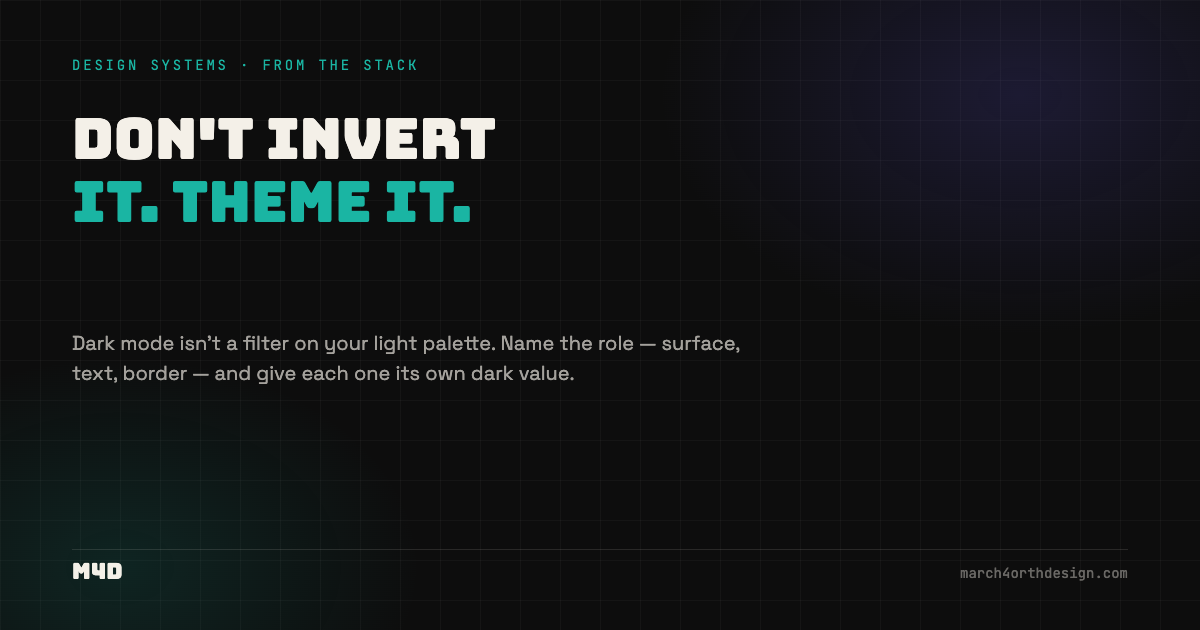
dark mode tokens: why inverting your palette doesn’t work
Flip every hex value for dark mode and the depth disappears — a card that read as “elevated” in light mode goes flat, because that depth was never really in the color. The instinct to treat dark mode as an inversion makes sense on the surface: light backgrounds become dark, dark text becomes light, done.…
-
-
-
-
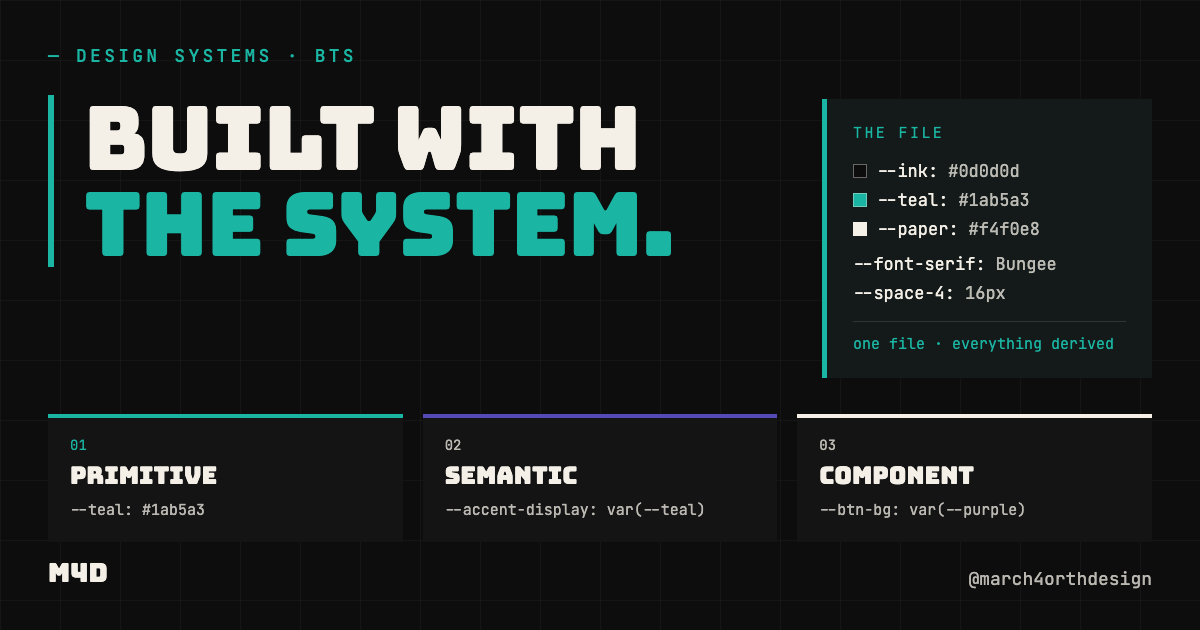
how i built this site with the system i teach — one file, every decision derived
—
by
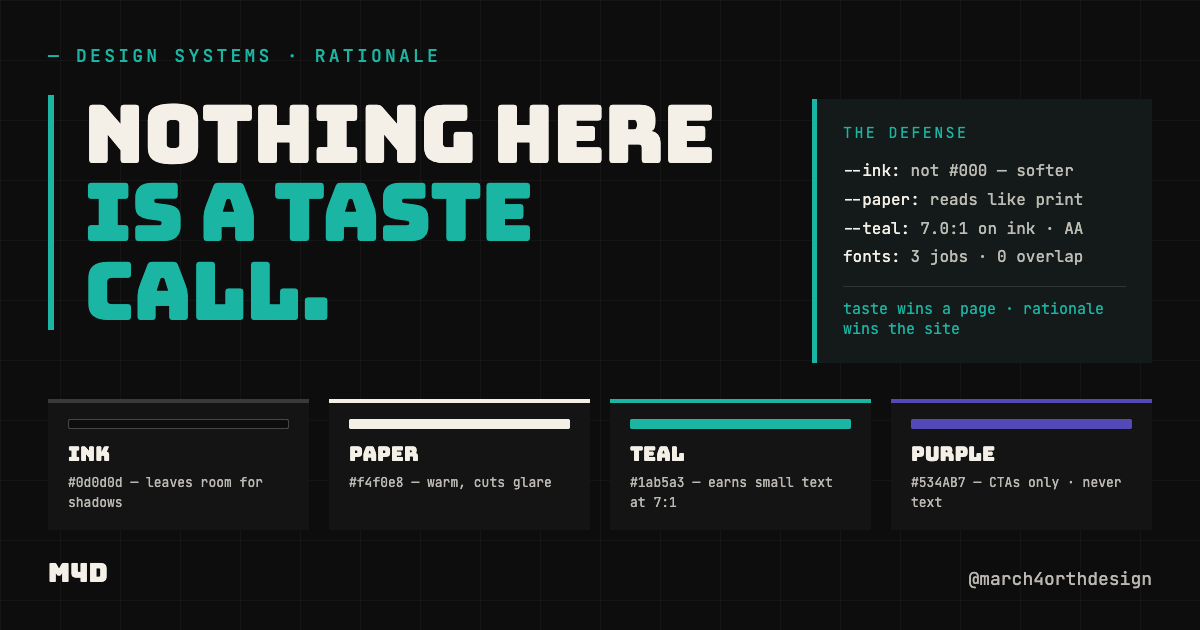
This site isn’t a demo of a design system. It runs on one — a single token file drives every color, spacing value, and type decision on the page you’re reading. Most design systems content has a credibility problem. The system gets taught from mockups. The examples live in a sandbox. The person explaining tokens…
-
-
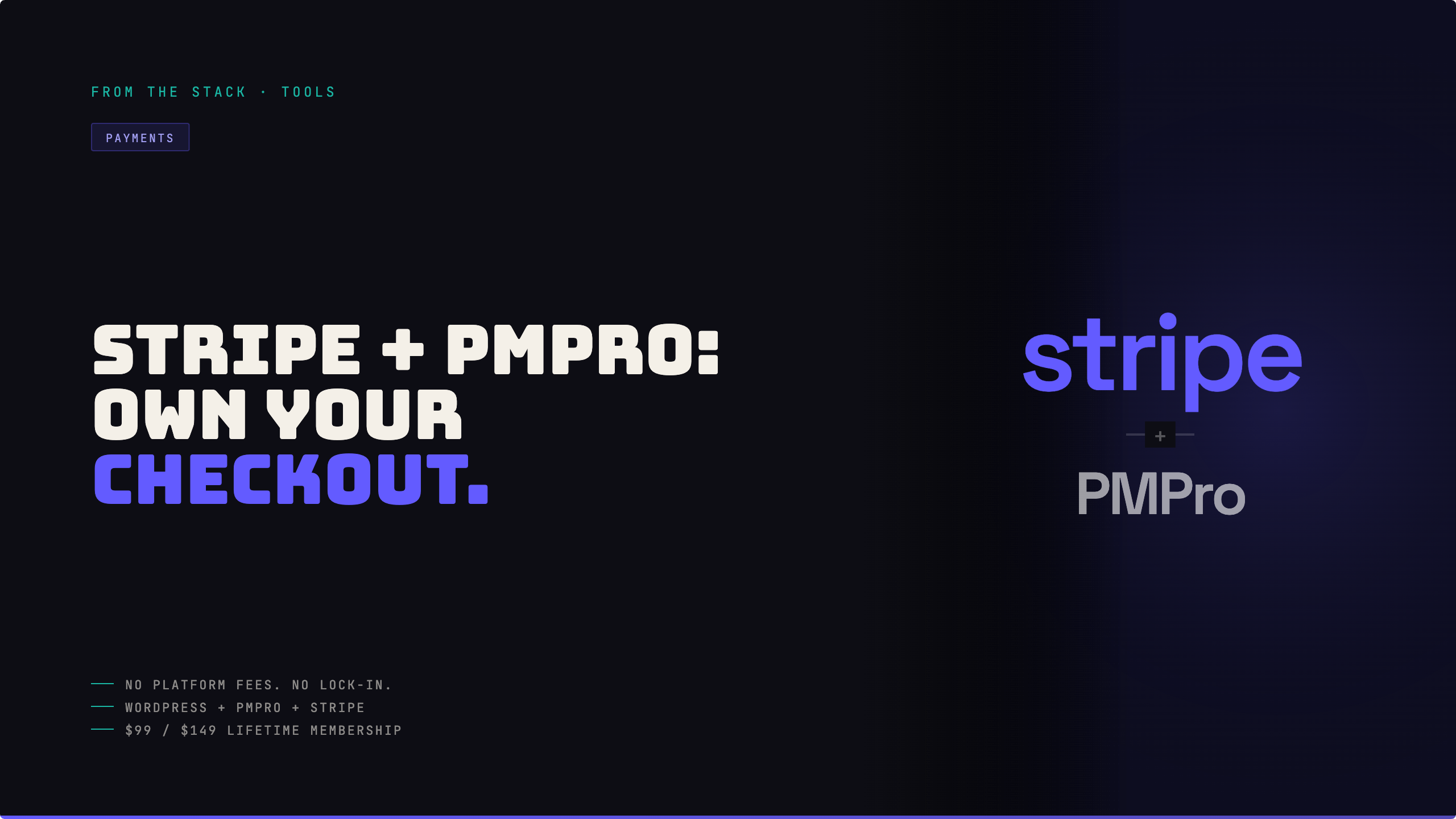
stripe + pmpro: how we built a membership checkout without a saas platform
Most designers reach for Gumroad or Lemon Squeezy — we went a layer deeper and own the whole checkout. The Design Stack membership runs on Paid Memberships Pro (PMPro) connected directly to Stripe, hosted on WordPress. No platform fees beyond Stripe’s standard 2.9% + 30¢. No third-party dashboard to log into. No lock-in. The tradeoff…
-
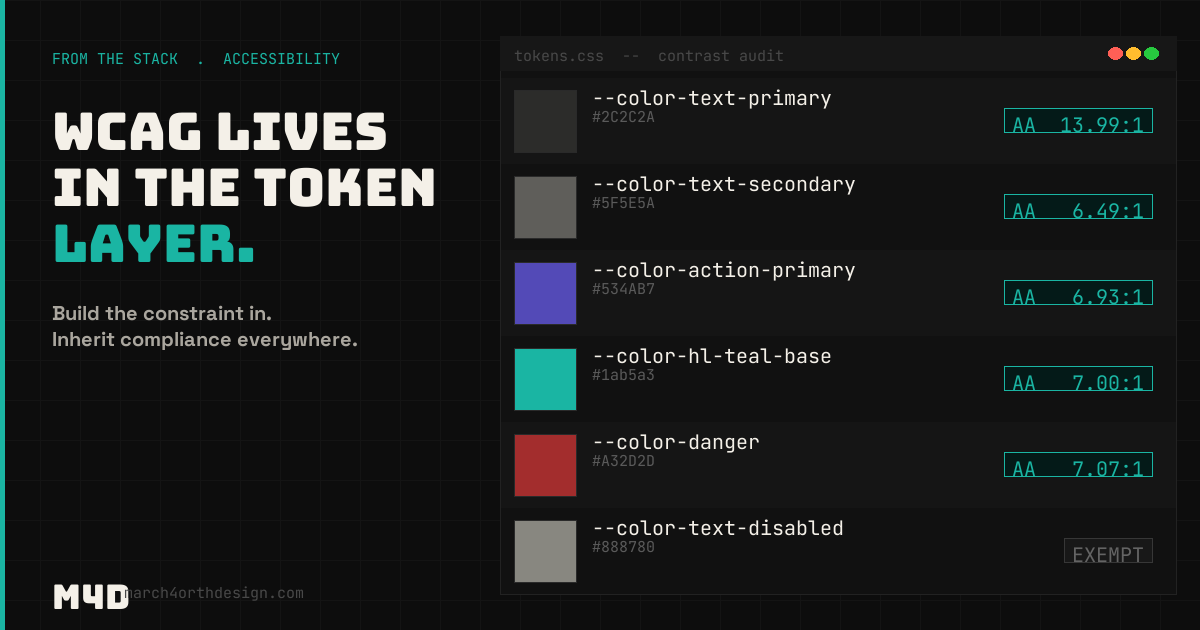
wcag and design systems: why accessibility belongs in the token layer
—
by
in Accessibility, Color, css, Figma, Fonts, Iconography, Sites, Styleguides, Tokens, UI KIt, UI/UX, Web DesignWCAG compliance isn’t a checklist you run at the end — it’s a constraint you build into the system at the token level. A lot of designers treat accessibility as a QA pass: ship the design, then check the contrast ratios. That approach fails at scale because it moves the problem downstream where it’s expensive…
-
vercel vs. godaddy: how we decide where to deploy each project
Not every project needs the same infrastructure — and using the wrong one costs you either speed or money. The M4D stack runs two different hosting setups for two different reasons. The projects site (static HTML, design system docs, blog) lives on GoDaddy — it’s a flat file site that deploys via FTP, loads fast,…
-
color systems
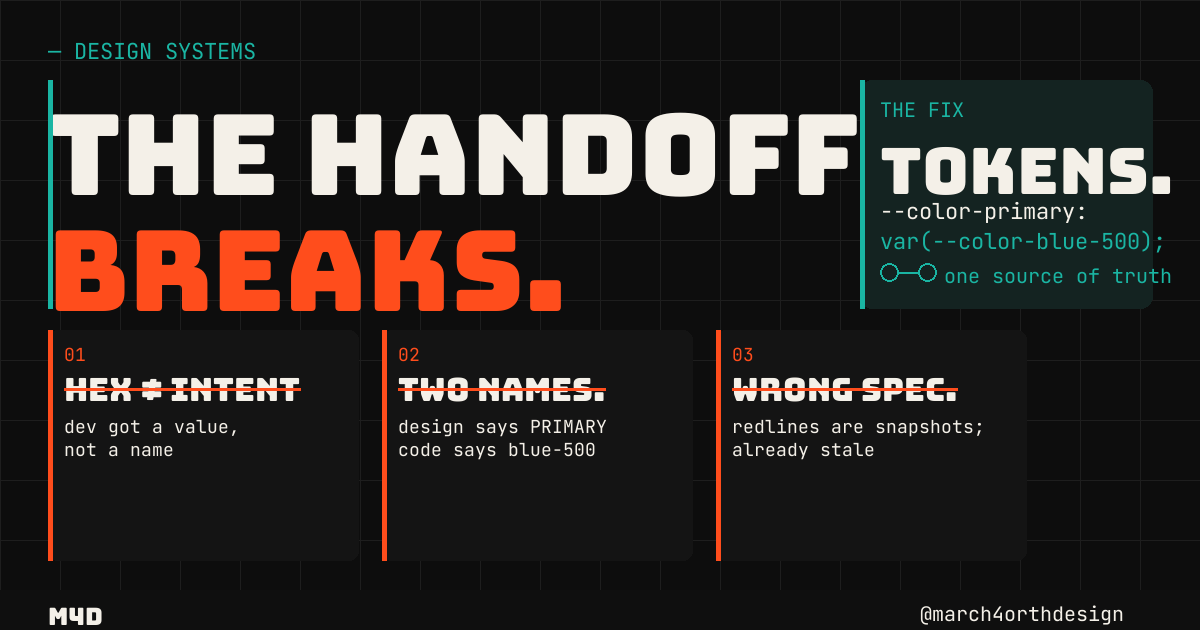
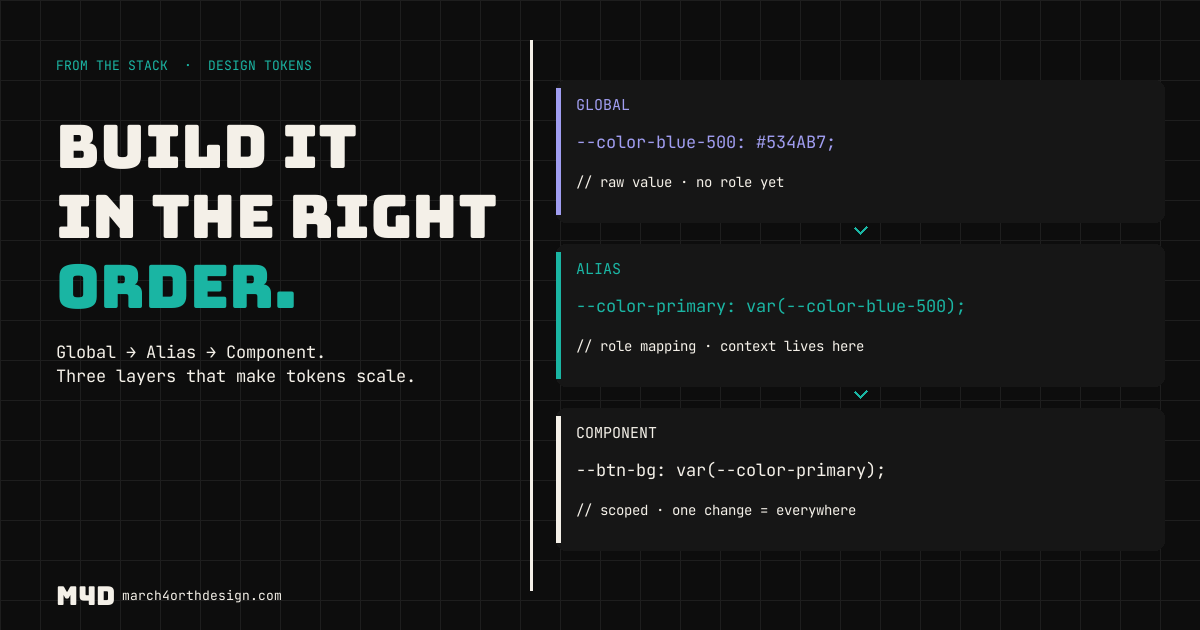
A palette comprises a collection of colors, while a color system establishes rules for color usage across three tiers: primitives (raw values), semantics (assigned meanings), and components (which utilize these meanings). This structure allows for streamlined updates across surfaces, enabling automatic adjustments for themes and branding changes.